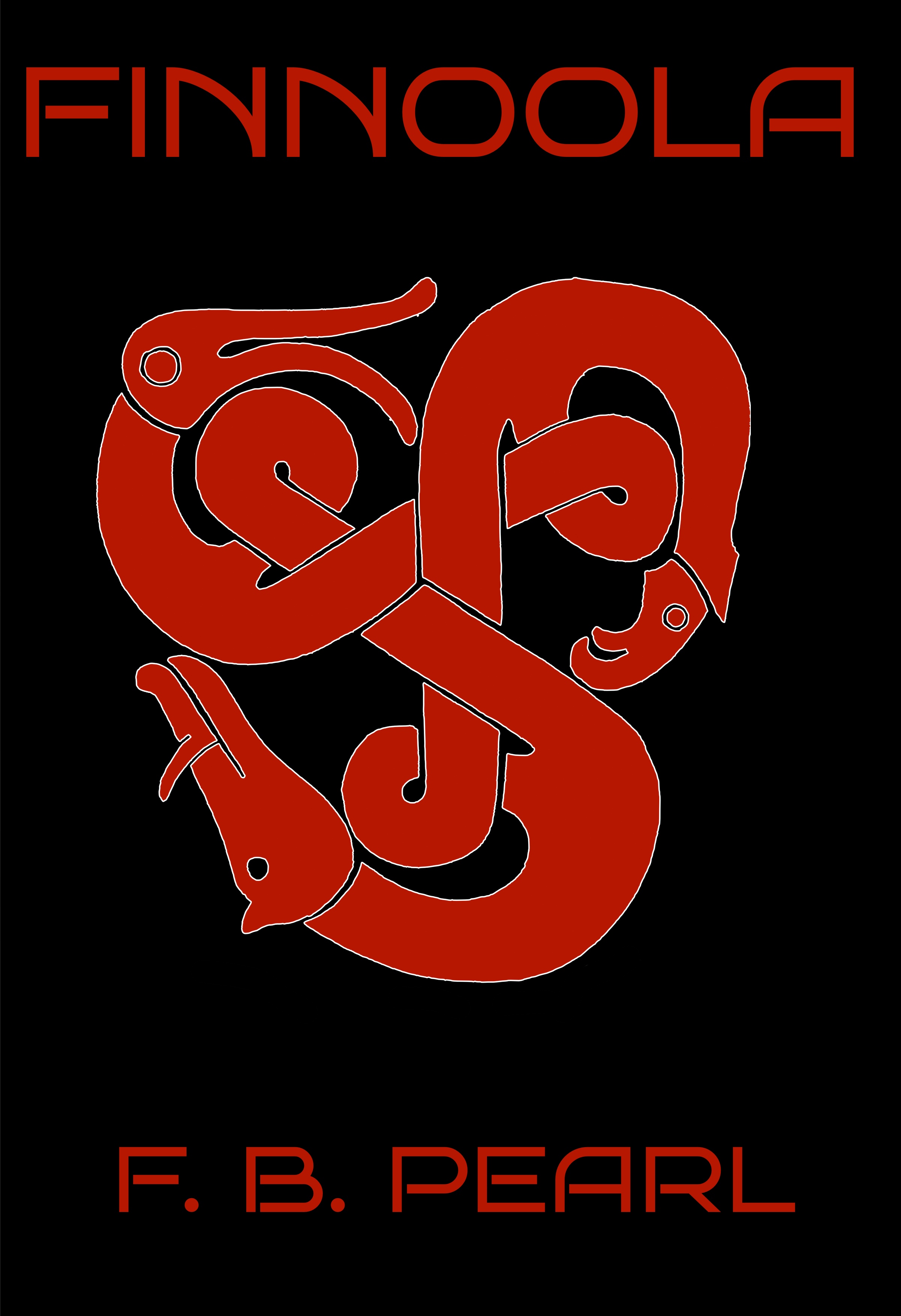
Finnoola
Wicked Sisters
Daughters of Eternity, Book 1
Finnoola is a mythic science-fantasy novel that moves between worlds: from a recognizable human past, through an extended journey in a fully realized mythic realm, to an unexpected return in 1942 Sweden. It is a story organized not by chronology, but by memory—exploring how trauma transforms into myth, and how myth eventually circles back to confront history.
The Story
The novel opens with a wound: a moment of violence rooted in the human world, where a queen is burned on an old granary-platform while her newborn daughter is carried away. What follows is not an escape from that past, but its elaboration—a journey through a world where gods walk, where the old divisions between the Vanir and the Æsir still shape the landscape of power, and where Freya's domain intersects with mortal consequence.
The fantasy chapters are not allegory or dream. They are memory doing what memory does best: refusing to remain small, refusing to remain contained. Sacred queenship, death cults, conversion myths, and the long afterlife of pre-Christian cosmologies surface throughout the narrative, reinterpreted through the lens of archaeology, comparative religion, and political anthropology.
Eventually, memory circles back. When Finnoola returns to the human world, she steps into 1942—a precise historical moment when Swedish neutrality had become an ethical burden, and when the deep past of Gotland was being reinterpreted even as modern Europe confronted the collapse of its moral certainties.
Archaeology and Myth
Finnoola is archaeologically informed. The world it imagines asks the same questions of an imagined society that an archaeologist would ask of a real one: Where do people gather? What structures endure? What materials are reserved for moments of consequence? How is identity assigned, and by whom?
The symbolic worlds preserved in Gotlandic picture stones, the material realities of early Scandinavian life, and the social logic of ritual practice all inform the novel's construction. Myth does not float free of the ground here—it grows out of it.
For Readers
Finnoola is written as a morally serious narrative intended for both younger and adult readers. It does not condescend to its audience or simplify its concerns. It trusts that readers—of any age—are capable of sitting with complexity, ambiguity, and meaning that reveals itself slowly.
The novel reflects a lifelong engagement with how stories shape the limits of what societies believe is possible—or permissible.
Frederic Pearl is currently seeking literary representation for Finnoola. Inquiries may be directed through the contact information on the About the Author page.